Valentine's Dinner for Two at Home
Restaurant reservations are booked.
Prix fixe menus cost $150 per person.
And honestly? Cooking for your partner at home beats fighting for a table in a crowded restaurant.
The trick is planning a date night menu that's impressive but not stressful — with a shopping list scaled for exactly two people.
The Challenge of Cooking for Two
You want to impress your partner with a home-cooked Valentine's dinner. But most recipes serve four to six people.
So you either:
- Cut everything in half and hope the math works out
- Make the full recipe and eat leftover risotto for four days
- Wing it and end up with too much of one thing and not enough of another
Valentine's Day makes this worse. You want something special — maybe a multi-course meal — but you don't want to spend the whole evening stressed in the kitchen while your date sits alone.
And buying ingredients for one fancy dinner often means buying way more than you need. Half a bunch of fresh thyme. An entire bottle of wine you only needed a splash of. Three times more shallots than the recipe calls for because that's how the store sells them.
The goal: impress your partner without the stress, waste, or mid-dinner panic.
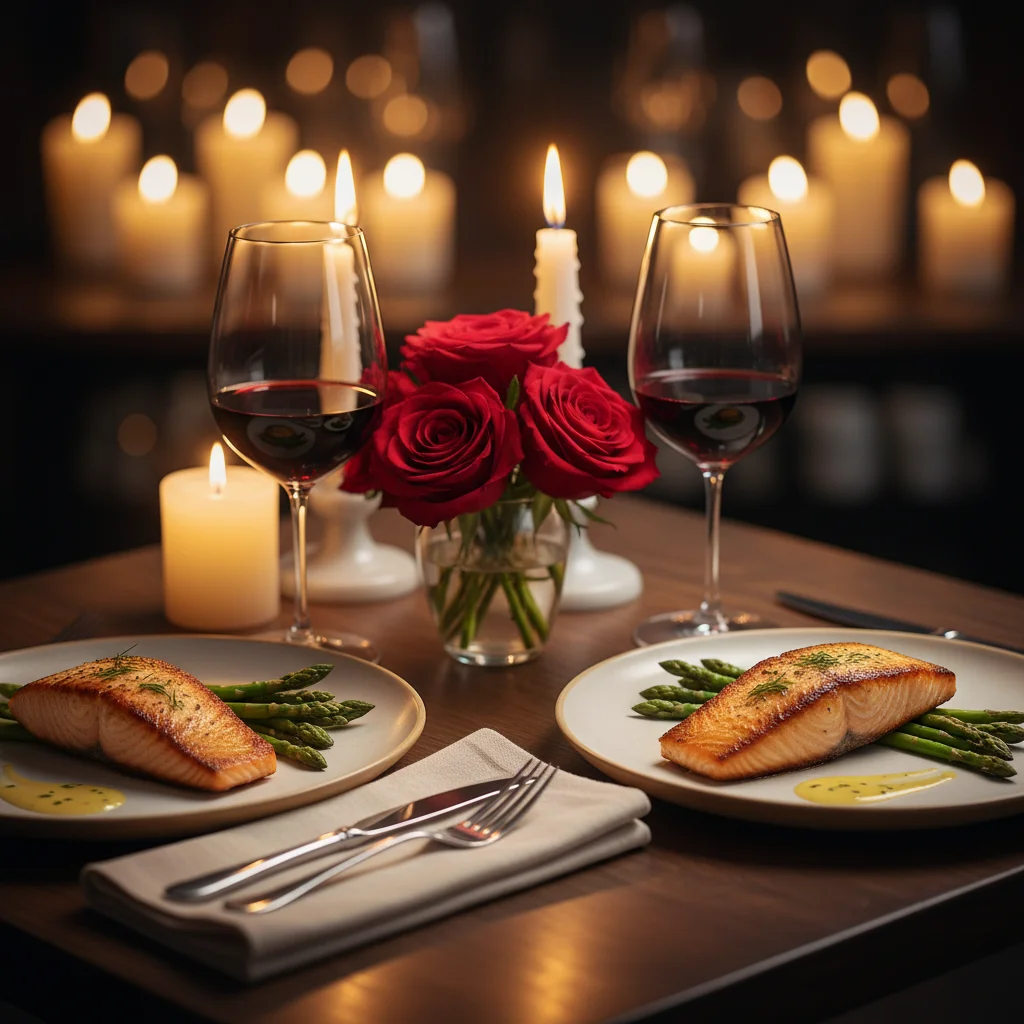
Plan a Menu That Works for Two
The best date night dinners have three things in common:
1. Shared Ingredients Across Courses
Pick courses that use overlapping ingredients. If your main course uses fresh herbs, choose a starter that uses the same ones. If you're opening a bottle of wine for the sauce, plan a dessert that uses wine too — or just drink the rest.
This keeps your shopping list short and your prep efficient.
2. Staggered Prep
Don't choose three courses that all need last-minute attention. Pick one thing you can prep ahead (like a dessert or appetizer), one thing that's mostly hands-off (like something roasting in the oven), and one thing you finish right before plating.
That way you're not sweating over the stove while your partner waits at the table.
3. Right-Sized Portions
This is where most date night cooking goes sideways. You need quantities scaled for two — not adapted from a recipe designed for a family of four.
💡 PlanShopChop tip: Tell Chef "plan a romantic three-course Italian dinner for two" and you'll get a complete menu with recipes already scaled for exactly two servings. No math, no guessing.
Build Your Menu and Shopping List
Instead of hunting for recipes that happen to serve two, start with what you want to cook.
Classic date night combinations:
- Italian night: Caprese salad, pan-seared salmon with lemon butter, panna cotta
- Steakhouse vibe: Caesar salad, filet mignon with roasted vegetables, chocolate mousse
- French bistro: French onion soup, coq au vin, crème brûlée
Once you have your menu, save each recipe to your library and adjust the servings to two. Now every ingredient in every recipe is scaled correctly — no halfing measurements or doing mental math.
💡 PlanShopChop tip: Add all three courses to your meal plan for Valentine's Day (or the night before if you're prepping ahead). When you generate your shopping list, PlanShopChop consolidates ingredients across all the courses. If your appetizer and main both need lemons, you'll see "3 lemons" on your list — not "1 lemon" listed twice.
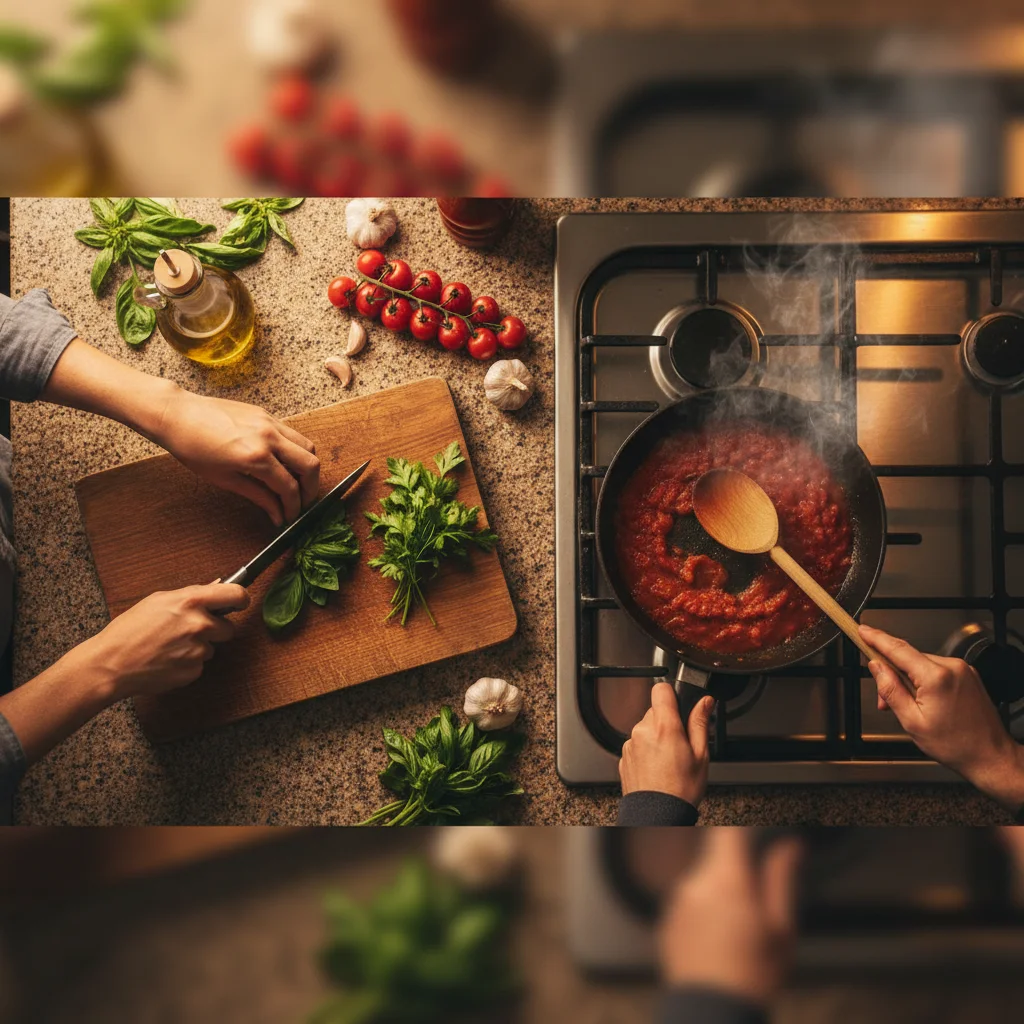
Execute Without Stress
Here's where good planning pays off.
Your dessert is already in the fridge (you made it this morning). Your appetizer is mostly prepped. Your main course is ready to cook.
Your partner arrives. You pour wine. You plate the appetizer while they get comfortable.
💡 PlanShopChop tip: When it's time to cook your main course, open it in Chop mode. Each step shows up one at a time with ingredient amounts built right into the instructions — no scrolling back to check measurements while your hands are covered in flour. If you get stuck on a technique ("how do I know when this sauce is reduced enough?"), ask Chef right there in the cooking screen.
A Sample Date Night Timeline
Here's how a Valentine's dinner might flow when you're cooking for your partner:
Morning or afternoon — Make dessert (chocolate mousse or panna cotta — needs time to set). Prep any ingredients that can be chopped ahead.
5:30 PM — Start your main course if it's something slow like a braise. Otherwise, use this time for final prep.
6:30 PM — Your partner arrives. Pour wine, light candles, plate the appetizer together.
7:00 PM — While they relax, finish cooking the main. If you planned well, this is just searing, roasting, or final assembly.
7:30 PM — Plate and serve. You both sit down to eat.
8:30 PM — Dessert is already done. You just pull it from the fridge.
The key: your shopping list had everything for all three courses, scaled for two, bought in one trip earlier that day. No emergency grocery runs. No missing ingredients. No stress.
Skip the Restaurant
A Valentine's dinner at home isn't a consolation prize. It's better.
You choose exactly what your partner will love. You control the atmosphere. You don't wait 45 minutes for a table or drop $300 on a prix fixe menu.
And the effort you put into planning and cooking? That's part of the gift.
All it takes is a plan — the right recipes, the right portions, and a shopping list that doesn't leave you with a fridge full of leftovers on February 15th.
Keep Reading
- Stop Stressing About Dinner — How to eliminate the daily "what's for dinner" decision fatigue.
- How Meal Planning Reduces Food Waste — Why buying only what you need starts with a plan.
- Meal Prep Strategies for Busy Weeknights — Batch cooking techniques that save time all week.
Try It Free for 5 Days
Plan your Valentine's dinner for two tonight. Build your menu, scale each recipe to two servings, and generate a single shopping list for everything you need. No waste. No stress. Just you impressing your partner with a home-cooked meal they'll remember.